Portfolio · Compliance and Risk
IFRS 9 Credit Loss and BoU Return
Takes in a loan book, stages each loan, calculates expected credit loss, runs the Bank of Uganda provisioning alongside it, and prepares draft credit-risk return schedules with a check that the totals reconcile.
- Discipline
- Credit risk · IFRS 9 · Regulatory reporting
- Status
- Concept demo. Not a client project. The loan book is invented and the BoU form layouts are placeholders.
Request access to open it. The demo keeps a SYNTHETIC EXAMPLE DATA banner on screen, and every BoU form layout is marked PLACEHOLDER.
The problem it solves
Ugandan banks report credit risk to Bank of Uganda every month under the 2005 classification and provisioning rules, while also measuring impairment under IFRS 9. Much of this work is done in spreadsheets. The two numbers have to be reconciled and the schedules tied out every month.
How it works
01
Load the loan tape: facility, borrower, days past due, balances, interest rate, collateral and restructure history. It is checked on the way in.
02
Classify each loan under the BoU rules and stage it under IFRS 9, using the 30 and 90 days-past-due backstops.
03
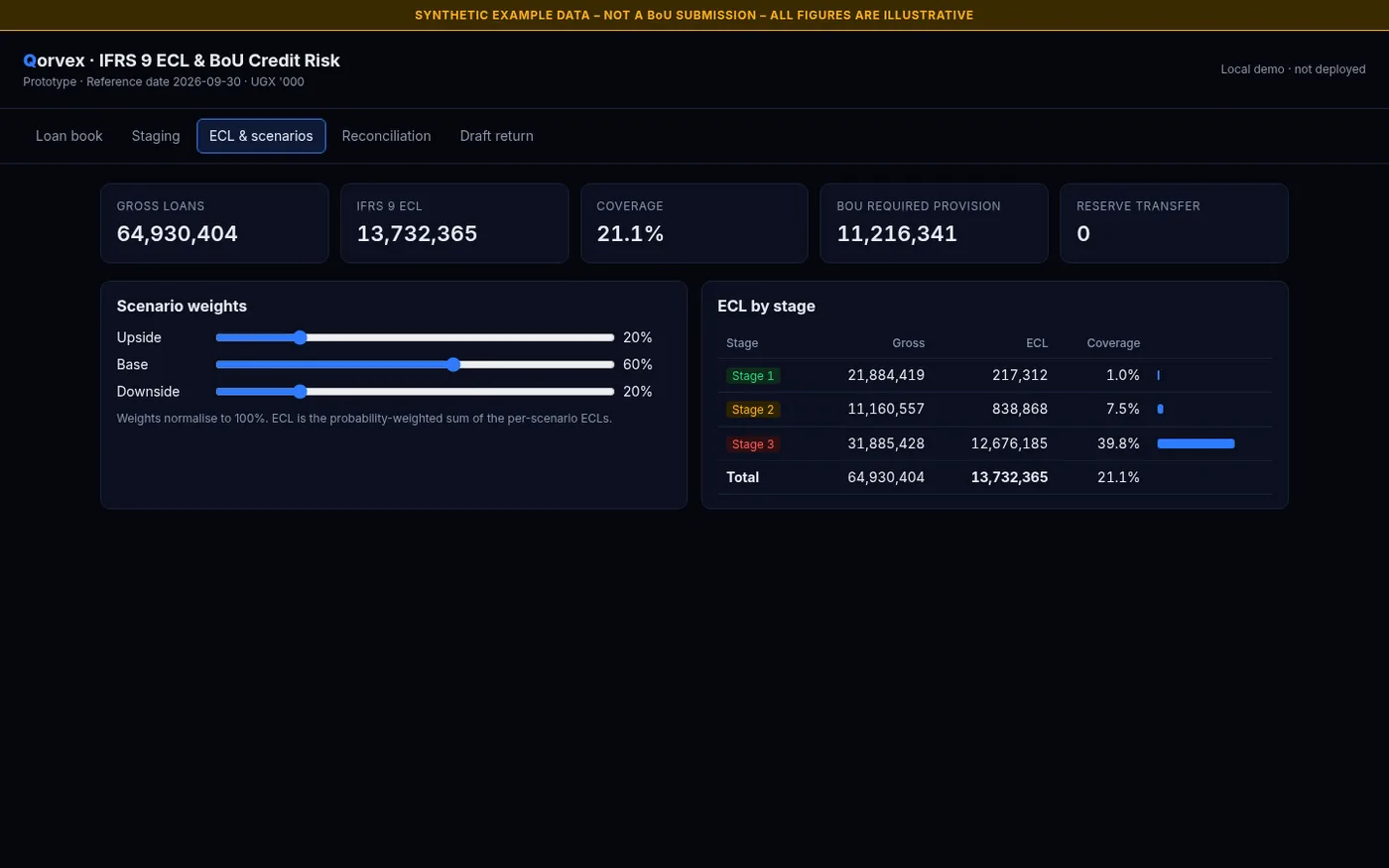
Calculate expected credit loss across three weighted scenarios, including a downside case.
04
Reconcile IFRS 9 impairment against BoU provisioning, including the regulatory reserve.
05
Prepare the draft return schedules and tie-outs, with a run log for review and sign-off.
Key features
Loan staging
Puts each loan in Stage 1, 2 or 3 and shows how the book moves between stages.
Expected credit loss
Probability of default times loss given default times exposure, discounted, across weighted scenarios.
Downside scenario
Switch to a downside view to see how the loss allowance changes.
Reconciliation and draft return
Compares IFRS 9 and BoU provisioning and lays out draft schedules with tie-out checks.
Who it is for
Banks and other supervised lenders in Uganda that file the monthly credit-risk return.
What the demo shows
- The loan book, staging, expected credit loss with a downside toggle, the reconciliation and a draft return.
What is real and what is example
Real
- IFRS 9's three-stage model, with presumptions of a significant increase in credit risk past 30 days and default by 90 days past due. Checked against ICPAU guidance.
- The 2005 BoU credit classification and provisioning regulations and the 2023 instructions for the monthly credit-risk return.
Example
- The 2,000-loan book and every figure are synthetic.
- Model settings such as the staging trigger, default probabilities, loss rates and scenario weights are placeholders that a client would set and approve.
- The BoU form layouts are placeholders, not the official template.
Screens from the demo
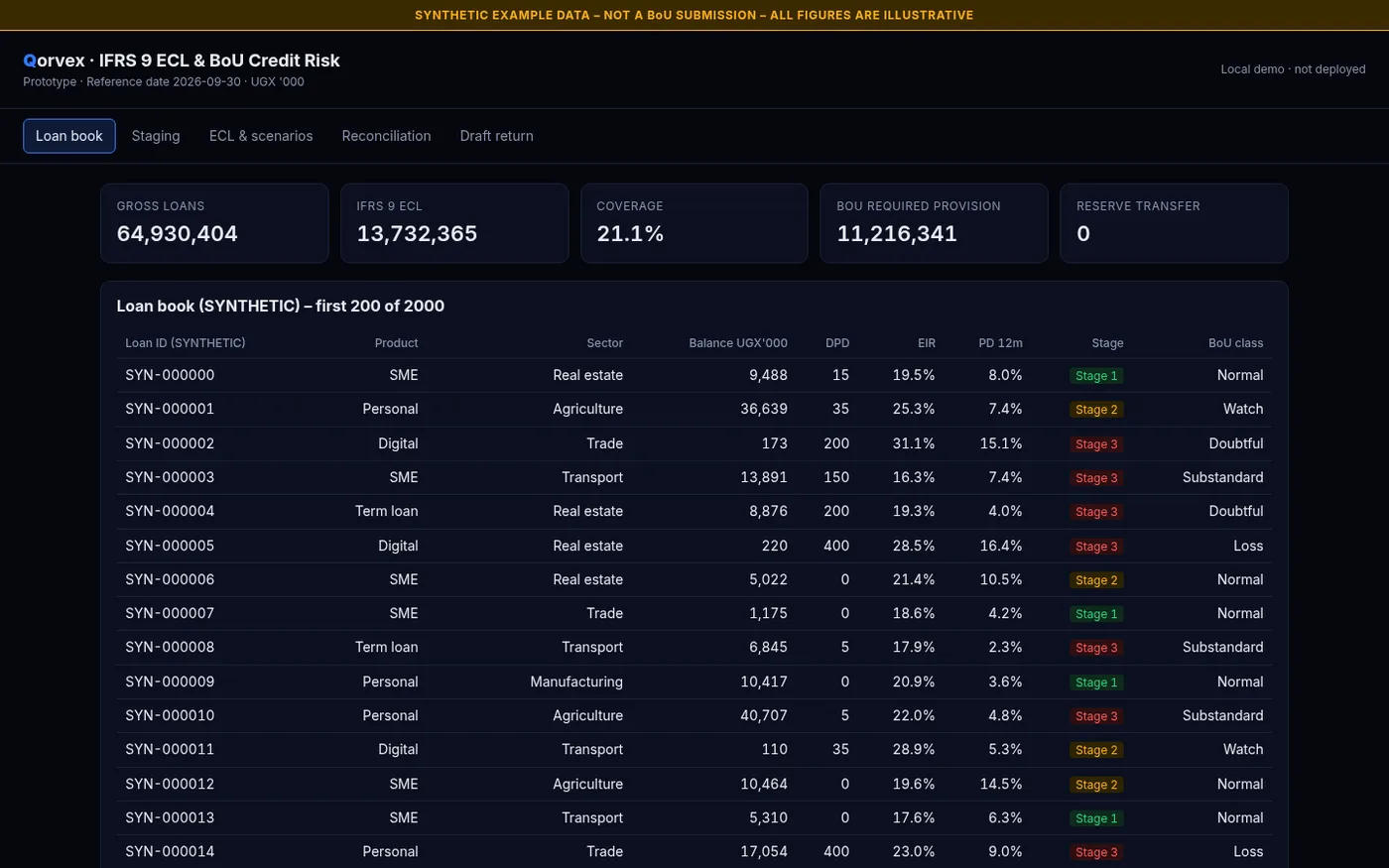
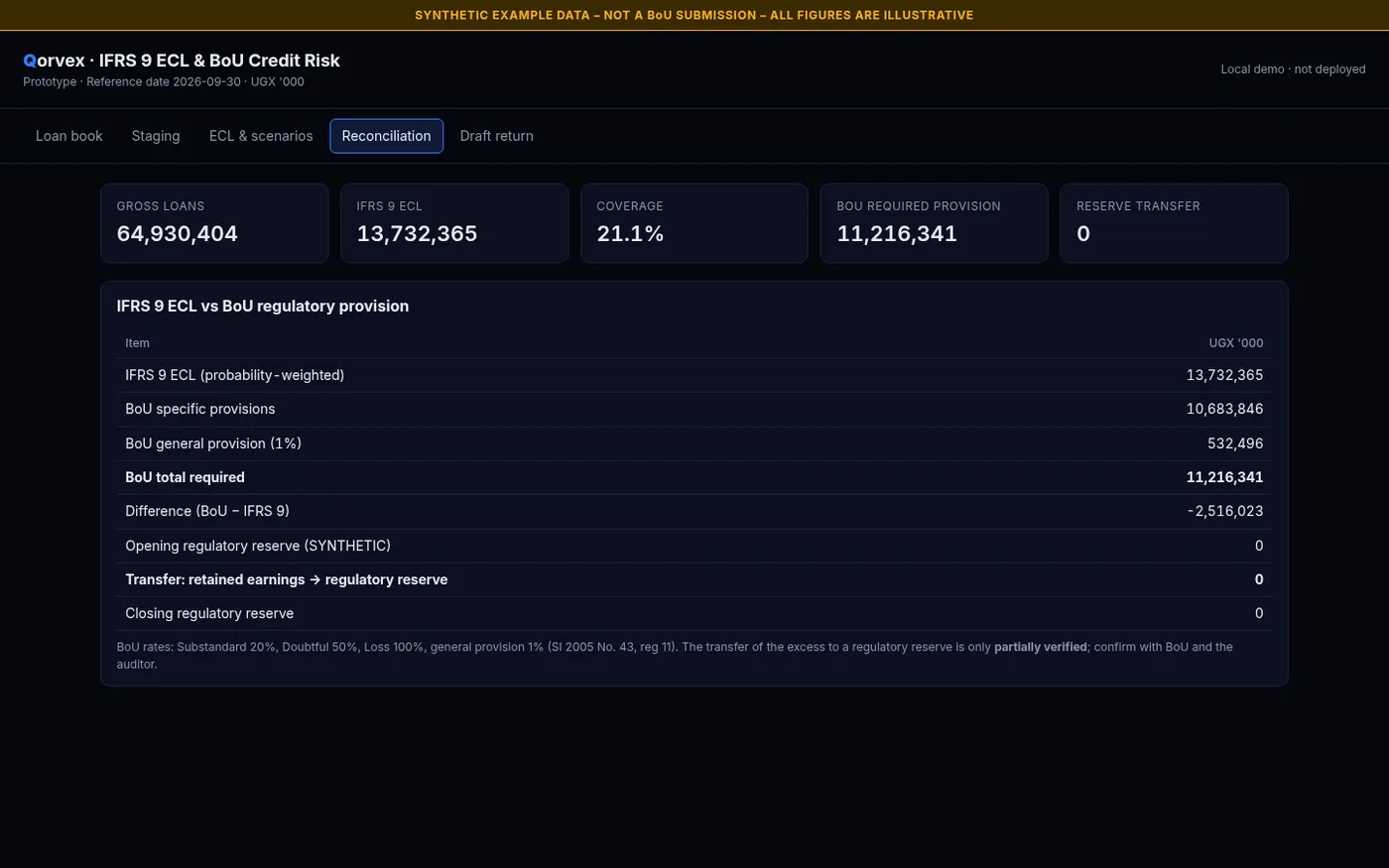
All figures in these screens come from a synthetic loan book.